

An Organization Born from American and Israeli Political Calculations, Operating within Closed Military Zones, Leaving Thousands of Victims and More Hunger Behind… This is the Full Story Behind Relief that Killed
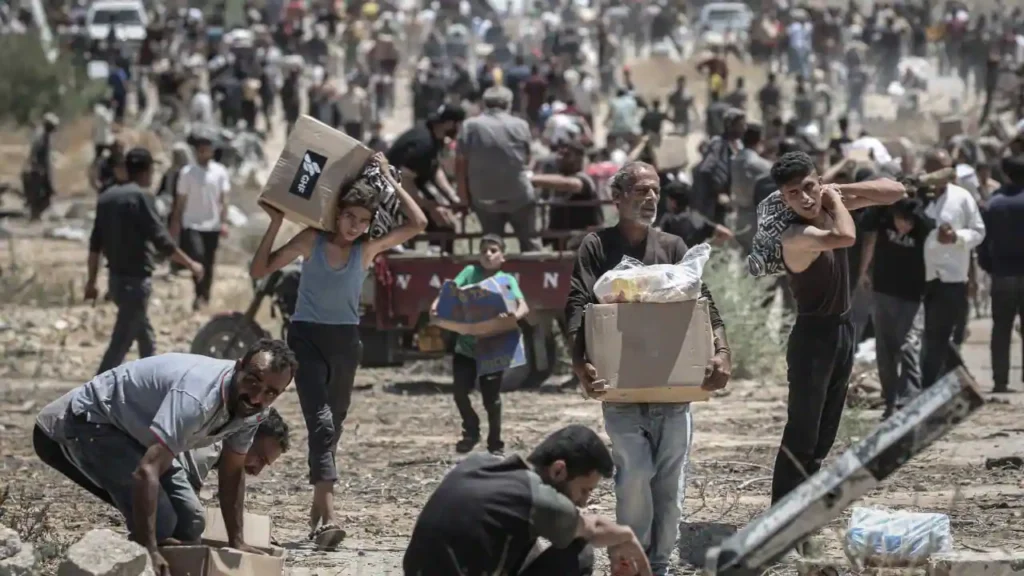
The Palestinians in Gaza did not need a new organization with a humanitarian name to realize that the world had abandoned them. All those starving needed was access to food, access to medicine, a lifeline to stop the deep descent into famine. Yet what was imposed on them in 2025 was nothing but another harsh experiment: Gaza Humanitarian Foundation, GHF, which was born amid American and Israeli political noise and ended amid heavy silence, leaving behind hundreds of dead, thousands injured, and memories unlike any humanitarian work in the world.
Who is GHF and How Was It Born Amid the Smoke?
The Gaza Humanitarian Foundation was established in February 2025 with direct American funding from the Trump administration and explicit Israeli approval. It was registered as an organization in the United States and Switzerland, led by individuals with long histories in US government work, including John Akre from USAID and Johnny Moore, known for his close ties to the evangelical movement that supports the Zionist project.
The Americans presented GHF as a “safe” alternative to the United Nations, an organization capable of operating “without aid being stolen.” But the reality in Gaza was different. The organization operated inside closed military zones controlled by Israel, accompanied by special American security forces, estimated by United Nations reports at around 300 personnel, all heavily armed.
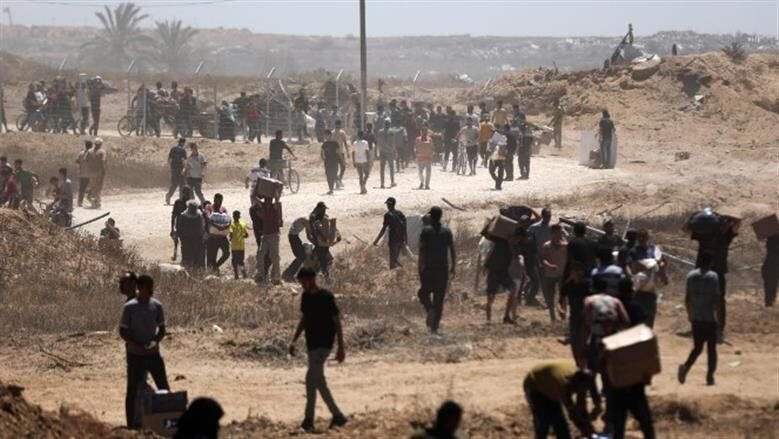
Al Jazeera’s report documenting the events of summer and fall 2025 was clear: GHF points were not distribution sites, but dangerous zones where people gathered because they had no other choice. The hungry had to risk their lives to receive a meal.
On November 24, 2025, the organization announced the closure of its operations after only five months, claiming it had completed its “emergency mission.” But people saw something different: the organization came as a political idea, left as a humanitarian failure, leaving behind a trail of violence that has not yet faded.
Human Losses — Numbers That Cannot Be Ignored
The problem was not just poor management but the way aid distribution was conducted. According to UN reports and Al Jazeera documentation, waiting areas turned into open zones for gunfire, explosives, and tear gas.
Victims recorded by OHCHR and Al Jazeera included:
- Over 2,600 deaths near the organization’s locations and on access roads.
- More than 19,000 injuries, a large proportion from direct gunfire.
- 175 starvation deaths in July and August alone, while people were trying to access food.
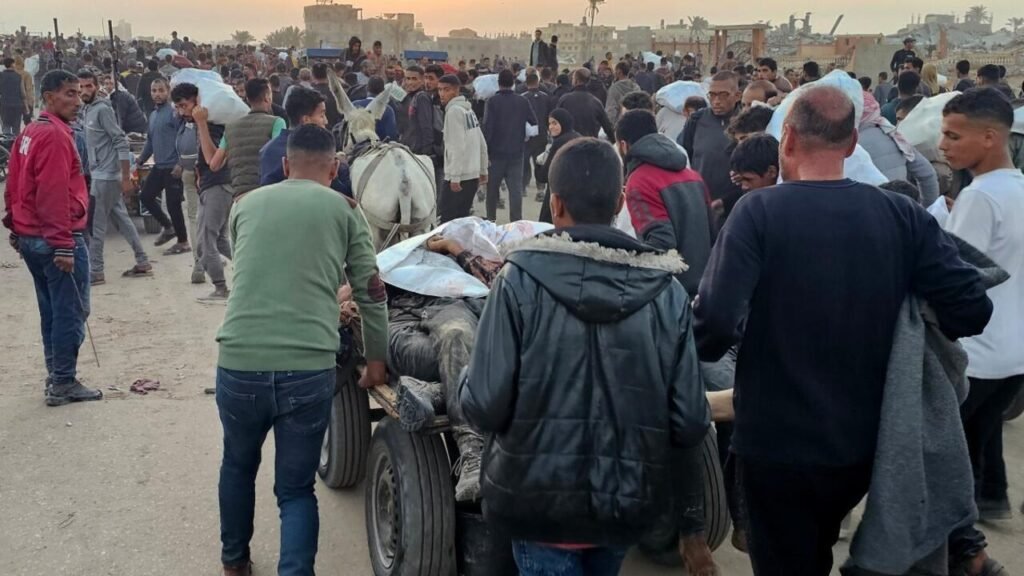
Al Jazeera reported that most of the victims were young people and children, and many died from being trampled or suffocated after pepper gas was fired at crowds trapped between the Israeli wall and armed GHF guards.
This was far from a “distribution of aid.” It was cold-blooded killing under a humanitarian banner.
As the number of victims rose, testimonies from within the organization began to reveal what was happening behind the fences.
Testimonies Reveal the Truth — What Those Inside GHF Said
American Contractor: “I have never seen anything like this even in the worst wars.”
“I saw my colleagues shoot dozens of unarmed Palestinians. They were young people searching for food. On one occasion, a watchtower fired on a woman carrying her child. There were no threats. It was like a military mission disguised as humanitarian work.”
Anthony Aguilar, one of the American security personnel who worked for GHF, said in his testimony, circulated on BBC, RT, and platform X:
Aguilar left his job after only a few weeks, confirming that what he witnessed were “clear war crimes.”
People described the distribution points as “traps,” with guards shouting over loudspeakers before opening fire for no apparent reason.
Israeli Soldiers Admit: “The Orders Were Open Fire”
In the British documentary Breaking Ranks, former Israeli soldiers acknowledged that American guards worked in direct coordination with the Israeli army and that the orders were clear:
“Shoot anyone approaching the red line, whether armed or not.”
This coordination, according to legal analysts, makes the organization part of Israeli military operations, not an independent humanitarian entity.
United Nations Stance — Rejection, Warnings, and Calls for Investigation
From the beginning, the United Nations refused to cooperate with GHF. UNRWA Commissioner General Philippe Lazzarini repeatedly stated that the organization operated outside humanitarian and legal frameworks.
Francesca Albanese, the Special Rapporteur on human rights, was the most explicit:
“GHF is a dangerous example of turning aid into a military tool. This is not humanitarian work. This is using hunger as a weapon.”
She also stated that the existence of the organization confirms Israel’s pursuit of alternatives that sideline the United Nations and create chaos in Gaza to serve control, and that what happened at distribution sites amounts to “war crimes” and possibly “elements of genocide.”
In August 2025, 28 UN experts issued a joint statement describing GHF as an “insult to the dignity of aid.” Yet, no international investigations were opened even after the organization ended its operations.
Legal Dimension — Where Does GHF Stand in International Law?
Legally, GHF’s actions are no different from any armed entity managing a conflict zone. According to OHCHR analyses and experts from the International Criminal Court, the violations can be classified into three categories:
1. Intentional attacks on civilians
A clear violation of the Geneva Conventions and the Rome Statute. The numbers show a consistent pattern: civilians were the target.
2. Using starvation as a weapon of war
When distribution points are set up in closed military zones and the hungry are forced to risk their lives to access food, this constitutes a fully formed war crime.
3. Lack of neutrality and independence
The principle of neutrality in humanitarian work was shattered at the first shot. Direct coordination with the Israeli army strips the organization of any humanitarian character.
What Did the Organization Leave Behind Before Leaving?
When GHF departed in November 2025, crossings did not improve, and aid amounts did not increase. Instead, it left heavy consequences:
Security chaos and the spread of armed gangs
Al Jazeera reported that the “Popular Forces,” supported by Israel, became more active after GHF’s withdrawal, exploiting the security vacuum around these points. According to residents, small armed groups emerged controlling areas that had been distribution points, increasing fear and disorder.
Worsening famine
According to IPC classification, Gaza officially reached famine stage in several areas by August 2025. GHF left behind not just a failed organization but a new chapter in the descent into hunger.
Justice Still Absent
The Gaza Humanitarian Foundation ended. Its doors closed and it left.
But the people who lost their children near its points still carry their pain. The hungry who ran toward its trucks still eat less than one meal a day. Voices that called it a “ccover for killing” have yet to find an entity to investigate, hold accountable, or even acknowledge what happened.
What occurred during GHF’s five months of operation was not a humanitarian experiment but a harsh test of international justice: a test that major institutions failed, and only those who fought for the truth succeeded.
Gaza, as always, remains a witness to everything: the hunger, the gunfire, and the world watching from afar.
Every day without accountability deepens the wound and distances justice even further.